The most interesting number in the Claude Opus 5 release isn't a benchmark score. It's the price that didn't change.
On July 24, 2026, Anthropic shipped Opus 5 at the same $5 / $25 per million tokens as Opus 4.8 — while claiming intelligence approaching Fable 5, its costlier flagship. If that holds up in production, the story isn't "new model, bigger benchmark." It's that the cost curve for frontier-class reasoning just bent again, and most enterprise roadmaps aren't priced for it yet.
What Anthropic actually shipped
Claude Opus 5 launched immediately across the surfaces where teams already work: the Claude API, Amazon Bedrock, Google Cloud, Microsoft Foundry, claude.ai, Claude Code, and Cowork. It's now the default model on Claude Max and the most capable option on Claude Pro. No staged rollout, no waitlist — day-one availability is itself a signal about how confident Anthropic is in the deployment story.
The positioning is deliberately about value, not just capability. Anthropic frames Opus 5 as offering intelligence comparable to Claude Fable 5 at roughly half the cost. In a market where every lab is racing to publish a new top-line score, choosing to hold price flat and lead with efficiency is a bet on what enterprise buyers actually care about at scale.
| Attribute | Claude Opus 5 |
|---|---|
| Input price | $5 / million tokens |
| Output price | $25 / million tokens |
| Context window | 1M tokens (default and max) |
| Max output | 128k tokens |
| Knowledge cutoff | May 2026 |
| Availability | API, Bedrock, Google Cloud, Foundry, claude.ai, Claude Code, Cowork |
The benchmarks that matter for builders

Anthropic highlights gains in agentic coding, knowledge work, visual understanding, and long-running tasks — exactly the workloads that break cheaper models under real conditions.
Two data points stand out for engineering teams:
- Agentic terminal coding: On Frontier-Bench v0.1, Opus 5 peaks around 43–44%, up from Fable 5's reported 33.7%. Terminal coding is a brutal test because it chains tool calls, reads real error output, and has to recover from its own mistakes.
- Business workflows: On AutomationBench, Anthropic reports higher pass rates at lower cost — the combination that actually moves a business case, not either metric alone.
There's also a quieter result worth flagging: a 10.2 percentage-point jump over Opus 4.8 on Anthropic's internal organic chemistry benchmark. Domain-specific reasoning gains like that hint the improvements aren't just prompt-tuning for coding leaderboards.
Treat all vendor-published benchmarks as a starting hypothesis, not a verdict. Frontier-Bench v0.1 and AutomationBench numbers are Anthropic's own reporting. Your workload, prompts, and tool schemas will produce different results. Build an eval on your tasks before you migrate.
The developer features that quietly change architecture
Model scores get the headlines, but the platform changes in Opus 5 are what will actually reshape how you build agents.
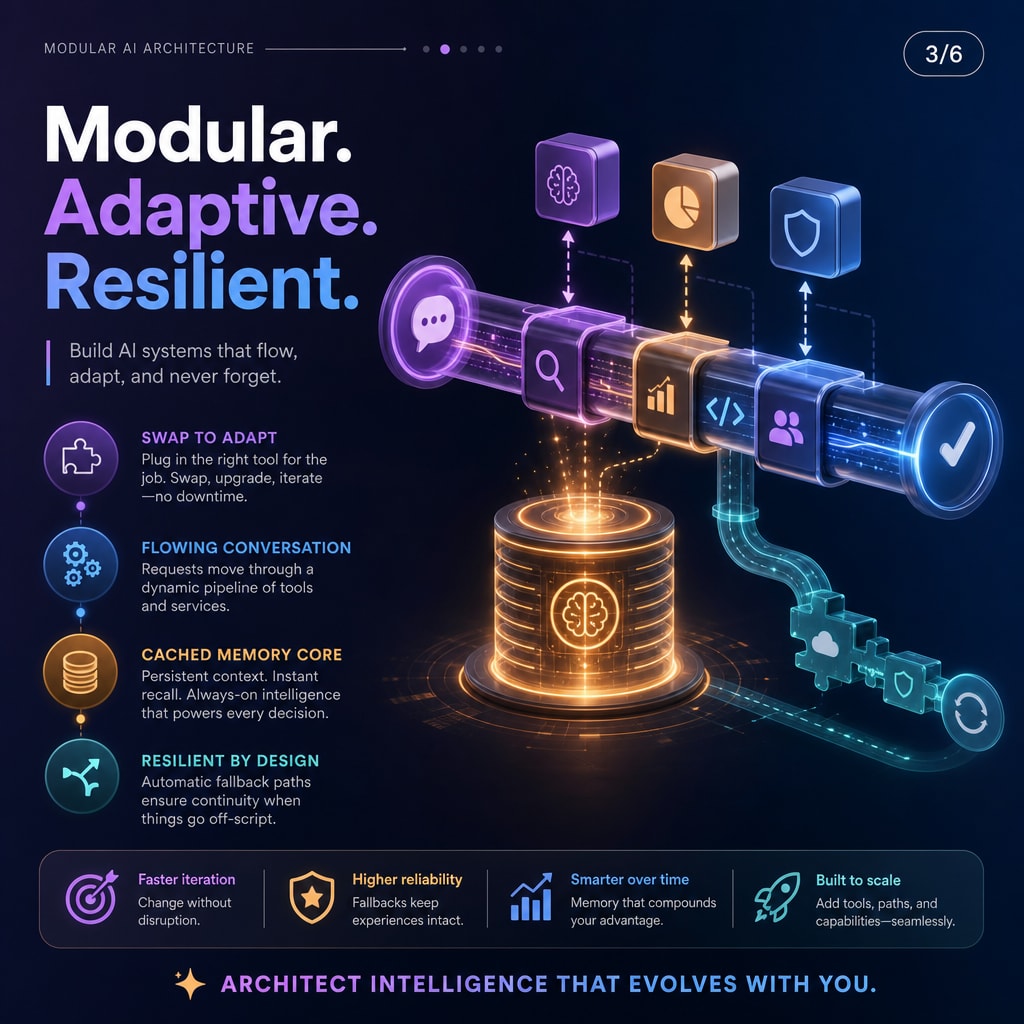
- Mid-conversation tool changes (beta): You can add or remove tools during a conversation while preserving the prompt cache. Previously, changing the tool set often meant a cache-busting reset. This makes dynamic, phase-based agents cheaper to run.
- Automatic fallback routing on the API: Requests declined by safety classifiers can seamlessly fall back to another model instead of hard-failing. That turns a production incident into a graceful degradation.
- Lower minimum cacheable prompt length: 512 tokens, down from 1,024 on Opus 4.8. Smaller reusable system prompts and tool definitions now qualify for caching, which lowers effective cost on high-volume agentic loops.
- Fast mode (research preview): About 2.5x the default speed at twice the base price, purchasable with extra usage credits for Claude Max. A latency lever for interactive workloads where responsiveness beats raw token economy.

The 512-token cache floor plus mid-conversation tool swaps is the combination most teams will underestimate. If you run long agentic sessions with rotating toolsets, these two together can cut a meaningful slice off your bill — no model swap required.
Why the alignment number deserves attention
Anthropic describes Opus 5 as its most aligned model to date, reporting a 2.3 score on overall misaligned behavior in automated behavioral audits — lower rates of deceptive behavior and stronger adherence to Claude's Constitution than Opus 4.8, Sonnet 5, and Fable 5.
For consumer chat, alignment reads as a safety marketing line. For enterprise agents with tool access, it's an operational metric. An agent that can execute code, hit internal APIs, and take multi-step actions is only as trustworthy as its tendency to stay on task and avoid deceptive shortcuts. Lower misalignment on long-running agentic work directly reduces the blast radius when something goes sideways.
The honest caveat: "most aligned to date" is a relative claim on internal audits. It is not a guarantee, and it does not remove your need for guardrails, human-in-the-loop checkpoints, and scoped permissions.
A practical migration playbook
If you're already on Claude, the flat pricing makes evaluation low-risk. Here's the sequence I'd run before flipping any production traffic.

- Pin your current baseline. Capture cost, latency, and quality metrics from your existing model on a fixed eval set. You cannot claim an improvement you never measured.
- Build a task-representative eval. Pull 50-200 real traces from production, not synthetic prompts. Score them on outcomes that matter to your users, not generic benchmark rubrics.
- Run Opus 5 in shadow mode. Route a copy of live traffic through it without serving results, and diff the outputs against your current model.
- Test the platform features individually. Verify cache behavior at the 512-token floor, exercise mid-conversation tool changes, and confirm fallback routing behaves the way your error handling expects.
- Decide with cost-per-successful-task, not cost-per-token. A model that costs more per token but finishes tasks in fewer turns can be cheaper end to end.
- Roll out gradually. Start at 5-10% of traffic, watch your dashboards, and keep the rollback path warm.
# Minimal shadow-eval loop: compare a new model against your current baseline
# on real production traces before serving any of its output.

def shadow_eval(traces, baseline_model, candidate_model, score_fn):
    results = []
    for t in traces:
        base = run(baseline_model, t.prompt, t.tools)
        cand = run(candidate_model, t.prompt, t.tools)  # not served to user
        results.append({
            "trace_id": t.id,
            "baseline_score": score_fn(t, base),
            "candidate_score": score_fn(t, cand),
            "baseline_cost": base.usage_cost,
            "candidate_cost": cand.usage_cost,
            "baseline_turns": base.turns,
            "candidate_turns": cand.turns,
        })
    return results

# Decide on cost-per-successful-task, not cost-per-token.
# A model that finishes in fewer turns can win even at a higher unit price.
Common pitfalls when adopting a new frontier model
- Chasing benchmark deltas instead of task outcomes. A few points on Frontier-Bench may not move your actual product metric at all.
- Assuming a 1M-token context is free capacity. Long contexts cost real money and can dilute attention. Retrieval and summarization still beat dumping everything into the window.
- Ignoring latency in agentic loops. Each extra tool-calling turn multiplies latency. Fast mode helps interactive flows but at double the base price — model it before you rely on it.
- Skipping the safety-fallback design. Automatic fallback routing is powerful, but if you don't handle the case where a different model answers, you can surface inconsistent behavior to users.
- Treating alignment scores as a substitute for guardrails. Lower misalignment reduces risk; it does not eliminate the need for scoped permissions and human review on high-stakes actions.
What this means for your roadmap on Monday
The strategic takeaway isn't "Opus 5 is the best model." It's that near-frontier capability at half the flagship price keeps compressing the gap between "prototype that impresses in a demo" and "agent you can afford to run at scale."
That compression changes the build-versus-wait calculus. Workflows you shelved last year because the economics didn't close — long-running research agents, multi-step business automation, coding agents that actually finish — deserve a fresh look at today's cost-per-successful-task. The bottleneck is shifting from model capability to your evals, your guardrails, and your ability to measure whether the agent actually did the job.
The teams that win the next cycle won't be the ones who adopt the newest model fastest. They'll be the ones whose evaluation harness is good enough to know, on day one, whether a new model is worth switching to.
— On adopting Claude Opus 5Frontier capability is becoming a commodity. Knowing whether it improves your product is the durable advantage.
How much does Claude Opus 5 cost?
Claude Opus 5 is priced at $5 per million input tokens and $25 per million output tokens, unchanged from Opus 4.8. Anthropic positions this as roughly half the cost of Claude Fable 5 for comparable intelligence.
What is the context window and knowledge cutoff for Opus 5?
Opus 5 has a 1M-token context window as both default and maximum, supports up to 128k output tokens, and has a knowledge cutoff of May 2026.
Where can I access Claude Opus 5?
It is available on the Claude API, Amazon Bedrock, Google Cloud, Microsoft Foundry, claude.ai, Claude Code, and Cowork. It is the default model on Claude Max and the most capable model on Claude Pro.
What is Fast mode in Opus 5?
Fast mode is a research preview that runs at approximately 2.5x the default speed for twice the base price. Claude Max subscribers can purchase it with extra usage credits. It is a latency option for interactive workloads rather than a cost-saving one.
Should I migrate my production agents to Opus 5 immediately?
Not blindly. Because pricing is flat versus Opus 4.8, evaluation is low-risk, but you should still run a task-representative eval and shadow test before switching. Decide based on cost-per-successful-task on your own workloads, not published benchmarks.
References
Planning an Opus 5 migration or building agentic workflows at scale? Let's talk through the eval strategy and cost model.
Get in touch